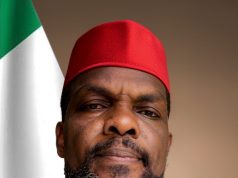
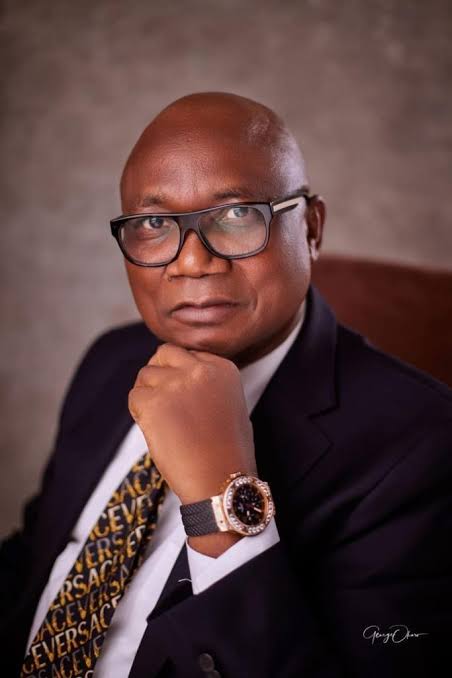
When former ISOPADEC Managing Director, Hon. Chief Charles Orie, announced his intention to contest the 2027 Imo State governorship election before selected leaders of Ogbako Ohaji-Egbema on Friday, November 7, 2025, at his Owerri residence, the declaration was not merely another political ambition—it was a political shockwave. It forced Imolites to confront the uncomfortable realities of the state’s dangerously imbalanced power structure.
Orie’s bold insistence on succeeding Governor Hope Uzodinma, combined with his confidence that Orlu Zone should once again produce the next governor, has raised urgent questions about the direction of the state, the future of the Imo Charter of Equity, and the quality of leadership Imo desperately needs at this critical moment.
This editorial examines the political implications of Orie’s ambition, the performance of ISOPADEC under his watch, and why Imo must insist on equity, fairness, and competence in the 2027 governorship election. The state cannot afford a continuation of the Orlu-era dominance that has lasted decades—nor can it entertain aspirants with questionable administrative track records or unclear developmental visions.
Orlu Zone’s 24-Year Grip on Power: A Political Reality Imo Cannot Ignore
Since the return of democratic governance in 1999, Orlu Zone has dominated the Imo governorship more than any other zone in the state.
Achike Udenwa: 8 years (1999–2007)
Rochas Okorocha: 8 years (2011–2019)
Hope Uzodinma: 8 years by 2027 (2020–2028)
This totals 24 unbroken years, and if another Orlu son takes over in 2027, Imo will be on the path to 28 consecutive years of Orlu governorship, with the possibility of 32 years should the new administration seek a second term.
This is not just a matter of statistics—it is a clear distortion of Imo’s political equilibrium. Such prolonged dominance contradicts every principle of balanced power rotation and undermines the foundations of justice and equity in a multi-zonal state.
Meanwhile:
Owerri Zone, despite being the capital and a major contributor to state revenue and population, has governed for only seven months (Emeka Ihedioha, May 29, 2019–January 14, 2020).
Okigwe Zone has only had a single completed four-year term (Ikedi Ohakim, 2007–2011).
As Orlu’s uninterrupted occupation of the governorship seat continues, it fuels suspicion, resentment, and political alienation. It threatens the unity and sense of fairness the state urgently needs to stabilize its politics and advance its development agenda.
Charles Orie’s ISOPADEC Record: A Troubling Gap in Leadership Credentials
Leadership is not measured by political longevity or ambition. It is measured by verifiable service, accountability, and results. For any governorship aspirant, a critical issue is track record. For Chief Charles Orie, his most recent administrative position—as Managing Director of ISOPADEC—is the only platform available for evaluation.
ISOPADEC receives substantial monthly allocations, including the constitutionally guaranteed 13% derivation fund. Its core duty is to drive development in Imo’s oil-producing communities—Agwa, Oguta, Egbema, Ohaji, and others whose resources sustain the state’s finances.
Under Orie’s leadership, however, ISOPADEC is widely regarded as having underperformed. In many oil-bearing communities, the commission’s presence remains invisible. Despite steady inflows of resources, the agency delivered little that could qualify as transformational or sustainable development.
In Agwa, one of Imo’s largest oil-bearing communities, the story is even more startling. During Orie’s tenure:
No new roads were constructed.
No health projects were executed.
No significant empowerment schemes were implemented.
No meaningful infrastructure was delivered.
No capital projects were executed.
Not even a foundation block was laid for any notable initiative.
These failures raise serious questions about ISOPADEC’s financial management and priorities under Orie’s watch.
If a candidate cannot demonstrate competent administration over a single commission with a clear mandate and dedicated funding, how can such a person preside over a complex state with 27 LGAs and diverse developmental challenges?
Governance is not powered by contacts or wealth; governance is powered by results.
Imo Needs Competence and Vision, Not Contact Lists and Wealth Displays
The Imo State of 2027 requires transformational leadership. It needs a governor who understands:
Economic restructuring
Security architecture
Agricultural modernization
Infrastructure renewal
Human capital development
Youth unemployment
Local government revitalization
Fiscal discipline
Environmental governance
Transparency and accountability
Basic, technical, and vocational education
Sports as a tool for development and unity
Health investment and sustainability
Contacts do not solve insecurity.
Wealth does not build sustainable institutions.
Boastfulness does not translate to development.
Proximity to federal power does not guarantee competence at the state level.
Imo needs a reform-minded leader with demonstrable achievements and deep knowledge of the socioeconomic realities of its 27 LGAs—not someone whose political résumé is loud but shallow.
Insecurity: Imo Needs a Healer, Not a Grandstander
Imo has endured one of the worst security crises in its history. The effects include:
Mass displacement
Declining economic activity
Loss of investor confidence
Decline in agricultural productivity
Worsening rural poverty
The next governor must be a stabilizer—someone who can rebuild trust, negotiate peace, deploy modern security strategies, and heal the psychological trauma communities have endured.
Imo does not need a politician whose primary claim is that “everyone knows him” or that he “has all the contacts.”
It needs a leader who understands the pain of the people and has demonstrated empathy in leadership.
The Imo Charter of Equity: A Compass for Stability
One of the most significant political legacies of Governor Hope Uzodinma’s administration is the strengthening of the Imo Charter of Equity, a framework designed to ensure fair zoning of the governorship among the three senatorial zones.
The Charter of Equity is not a slogan—it is a moral contract.
If respected, the charter demands that the next governor of Imo State must come from Owerri Zone.
This is not merely about geography; it is about justice, stability, and balance. Every political party must therefore present candidates from Owerri Zone in 2027.
Anything short of this would be an attack on political fairness and a deliberate attempt to perpetuate a 28-year imbalance.
A Warning Against Instrumentalizing Federal Influence
Some aspirants are banking on their relationships with the presidency and federal power blocs. This strategy is dangerous and profoundly anti-democratic.
No amount of contacts in Abuja will determine the next governor of Imo State.
The people of Imo will decide.
Federal might must not be weaponized to distort the will of the people. Such an approach undermines the dignity of Imolites and delegitimizes any mandate secured through it.
2027: Imo at a Critical Crossroads
The 2027 governorship election is a turning point. Imo stands between two paths:
One path leads to justice, equity, unity, and development.
The other leads to resentment, imbalance, and continued domination by one zone.
Imo must choose wisely.
The future of the state cannot be entrusted to aspirants with questionable administrative histories or unclear developmental blueprints. It must be entrusted to leaders rooted in competence, equity, and transparency.
Conclusion: Imo Must Stand for Equity and Merit
Chief Charles Orie’s ambition is legitimate under democratic principles. But legitimacy of ambition does not translate to suitability for office. His administrative record at ISOPADEC raises serious concerns, and his aspiration threatens the equity and balance Imo urgently needs.
For the sake of fairness, stability, and development, 2027 must belong to Owerri Zone.
Imo must choose leaders with verifiable records.
Imo must resist aspirants whose credentials are contacts, wealth, or theatrics.
Imo must defend the Imo Charter of Equity.
Only then can the state heal, rebuild, and chart a new future.
The time to make that choice is now.
By John Mbonu Uchenwoke-Ekperechi
Publisher & Editor-in-Chief, Inside Agwa News
Public Affairs Analyst
Convener, Renaissance Oguta Constituency (ROC)
Former Candidate, Oguta State Constituency (2023)
BA, History & International Studies, UNN
MA, Institute of African Studies, UNN (In-view)