By Peter Dibia.
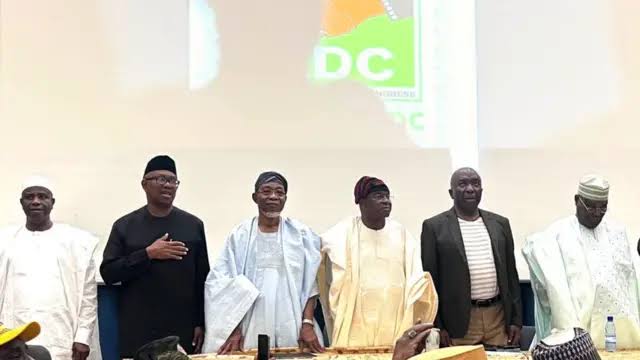
As Nigeria inches closer to another decisive general election, the political atmosphere is once again buzzing with alliances and permutations. Recent reports that the African Democratic Congress (ADC), Peoples Democratic Party (PDP), and Labour Party (LP) are in talks to form a coalition ahead of the 2027 general elections have sparked both excitement and skepticism among political observers. But beyond the headlines and the photographs of handshakes and symbolic smiles lies a deeper concern, a familiar loop of recycled leadership.
The announcement of the coalition surfaced in June 2025 during a joint press briefing in Abuja, where party leaders including LP Chairman Julius Abure, PDP’s Acting National Chairman Umar Damagum, and ADC’s Ralph Okey Nwosu addressed journalists. They claimed that the coalition was designed to “rescue Nigeria from failed leadership” and “present a united front against the ruling All Progressives Congress (APC).” However, what remains evident is the absence of new faces, new ideas, and new energy.
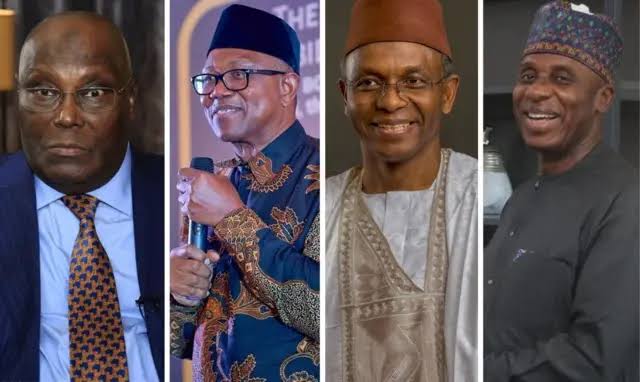
Nigeria has overgrown this level of political deception. Since gaining independence on October 1, 1960, the country has continuously recycled political elites from one administration to another. From the First Republic (1963–1966) through the military regimes of the 1970s and 1980s, and even into the Fourth Republic which began in 1999, it has been a long and troubling tradition of familiar faces occupying power sometimes switching party platforms like changing clothes, but never altering their outdated ideologies.
In the words of a famous proverb, “You cannot put new wine into old wineskins.” That is exactly what Nigeria’s current political actors are trying to do. The recent coalition is a case of different political labels sewn on the same worn-out garment. From 1999 to 2023, Nigerians have seen leaders like Olusegun Obasanjo (PDP), late Umaru Musa Yar’Adua (PDP), Goodluck Jonathan (PDP), and Muhammadu Buhari (APC) promise change, only to entrench the same structures of inefficiency and political patronage.
The February 2023 presidential election, which brought Bola Ahmed Tinubu of the APC to power, was also marked by the dominance of these same political titans. Tinubu, a former governor of Lagos State from 1999 to 2007, had long positioned himself as a kingmaker before becoming king. Atiku Abubakar, the PDP’s flagbearer, is a former Vice President who has contested every presidential election since 2007. Peter Obi, although widely considered a fresher alternative, was also a former governor of Anambra State and a long-time PDP member before moving to the LP. Even Rabiu Musa Kwankwaso, another 2023 contender, has served as Kano State governor and a federal minister.
So, what is new in the so-called coalition? What change can be expected from parties who refuse to cleanse their stables of career politicians who have spent decades feeding on Nigeria’s fragile democracy?
Political nostalgia is one of the greatest threats to Nigeria’s development. Many Nigerians, burdened by poverty, insecurity, and poor infrastructure, often look back at past leaders through rose-coloured lenses. This allows politicians to rebrand themselves and re-emerge as saviours every election cycle.
For instance, the PDP, which ruled Nigeria for 16 years (1999–2015), has positioned itself as a victim of APC misrule. The APC, in turn, blames the PDP for laying a foundation of corruption and mismanagement. Meanwhile, the ADC and LP, though relatively new, continue to open their doors to defectors from these mainstream parties, instead of building fresh grassroots structures powered by visionary youths.
When ADC Chairman Ralph Nwosu described the coalition as a “strategic alignment to birth a new Nigeria” during a June 28, 2025, forum in Lagos, he failed to explain how this new Nigeria would emerge without new Nigerians at the helm of political affairs.
The truth remains the same: if the ADC or any other political party intends to get it right, they must do more than change slogans they must change the players. Nigeria needs individuals who have never tasted political power but who have distinguished themselves in their various professional and ethical capacities. The presidential, vice presidential, gubernatorial, and legislative candidates must not be individuals who treat politics as a career or retirement plan.
The nation is in urgent need of leaders who are rich in mind, character, and capacity. Leaders who have built businesses, transformed communities, created jobs, or spearheaded innovation in medicine, technology, agriculture, and education without public funds. Nigeria’s future must not be built on recycled ambition but on refreshed vision.
Nigeria’s median age is about 18 years, yet the average age of political party chairmen and presidential candidates remains above 60. This demographic disconnect explains much of the disillusionment among young Nigerians. The Not Too Young To Run Act, signed into law in 2018, was a legislative milestone that lowered the age limits for elective offices. But more than five years later, youth inclusion in real political leadership remains cosmetic.
In the 2023 elections, for instance, only a handful of candidates under 40 secured seats in the National Assembly. Meanwhile, youth-led movements like the #EndSARS protest of October 2020 continue to be met with suspicion, repression, and surveillance rather than inclusion and dialogue.
If this proposed coalition wants to build credibility, it must prioritise youth representation at every level. It must empower young Nigerians not only as voters but as candidates, strategists, and policy makers.
The way forward is clear, but it requires courage and commitment from both political institutions and the electorate. Here are some practical solutions:
Adopt Internal Party Democracy: Political parties must embrace transparent primaries and ensure that candidates emerge through merit, not manipulation or favouritism. This will allow fresh, competent aspirants to rise.
Strengthen Political Education: Civic education and political literacy must be scaled up across secondary schools, universities, and communities. The Independent National Electoral Commission (INEC) and civil society groups must champion this cause ahead of the 2027 elections.
Ban Cross-Carpeting Without Consequences: Defection from one party to another without ideological explanation should attract penalties. A constitutional amendment should be pursued to this effect to reduce political prostitution.
Cap Political Tenure and Candidacy Attempts: Nigeria should consider limiting the number of times one individual can run for a particular political office. This will allow new blood to circulate.
Embrace Technology and Diaspora Participation: E-voting and diaspora voting should be implemented to expand participation and credibility. Millions of Nigerians living abroad can contribute to nation-building if allowed to vote and run for office.
Public Funding for New Entrants: New political candidates should be eligible for grants or subsidised campaign platforms to level the playing field. This will reduce dependence on godfathers and corrupt financiers.
Make Political Debate Mandatory: Televised debates for all elective offices should be made mandatory and enforceable by INEC. This will expose candidates’ ideas or lack thereof to the public.
Recognise and Support Grassroots Movements: Nigeria must stop criminalising civil society movements. Instead, it should institutionalise their voices in policy-making, budgeting, and electoral monitoring.
Nigeria stands at a historic crossroads yet again. The rising cost of living, widespread insecurity, deepening poverty, mass migration of professionals, and breakdown of trust in government require bold, transformative leadership. Yet, what is on offer in this ADC-PDP-LP coalition is far from bold. It is, at best, a political make-up job old faces in slightly newer masks.
Nigerians must resist the urge to romanticise the same individuals who have failed in the past. A country of over 200 million people cannot afford to limit its political destiny to less than 200 political families.
As 2027 approaches, the electorate must look beyond posters and slogans. They must ask: What has this person done outside of politics? What new vision is on the table? Who is financing this candidate and why?
History is watching. The world is watching. Most importantly, the millions of unborn Nigerians whose fate depends on today’s decisions are silently hoping that this generation will finally break the cycle of recycled leadership.
The time has come for a truly new Nigeria, driven not by old alliances, but by new allegiance to progress, integrity, and innovation.