WHERE WERE THE GOVERNMENT REPRESENTATIVES ALL THIS TIME?
g
AGWA MUST PREVAIL — A CALL FOR RESPONSIBLE GOVERNANCE
By John Mbonu Uchenwoke-Ekperechi
Publisher/Editor-in-Chief, Inside Agwa News
In moments of collective distress, nations, states, and communities look instinctively to their leaders—not for charity, but for duty. John Locke described government as a “fiduciary power… held in trust for the people.” Jean-Jacques Rousseau added that sovereignty remains the people’s, only delegated temporarily to leaders who must act in the interest of the common good. Even Karl Marx, from an economic viewpoint, warned that leaders who abandon the masses for private interest create the very conditions for social disorder.
Today, these voices echo through Agwa like a haunting reminder of what governance should be—and what it has dangerously drifted away from.
For months, and indeed years, a whole clan stood in distress, yet silence answered their cries. Agwa must prevail—not as a mere slogan whispered in times of crisis, but as a demand grounded in accountability, visibility, and responsible leadership.
Chinua Achebe once wrote “There Was a Country,” a solemn lamentation of lost promise. One wonders what the literary giant would write today about states or clans whose leaders have gone numb to suffering. Yes, there was a clan called Agwa, a time when governance was not merely a political performance but a moral obligation. Under Dr. Sam Mbakwe—the people’s governor, fondly hailed as the “Weeping Governor”—leadership meant empathy. Service was not delegated to bureaucracy; it was carried out with passion, integrity, and tears.
Agwa and Oguta once had leaders who embraced responsibility as sacred. The late Nze Amadi, former Chairman of Oguta LGA, demonstrated what it meant to lead with commitment. Today, however, governance appears to have retreated to the shrine of self-adulation, patronage, and unchecked personal enrichment—to what Locke referred to as “the betrayal of political trust.”
This newspaper intervention is not a lamentation of nostalgia. It is an examination of the systematic abandonment of governance in Agwa—a thriving, populous, oil-producing clan with six autonomous communities and three INEC wards, yet one suffering neglect unprecedented in contemporary Imo State.
AGWA: A CLAN TOO BIG TO BE IGNORED, YET LEFT TO SUFFER
Agwa is one of the largest clans in Imo State by landmass and population. It feeds the state through agrarian strength. It contributes to state and national revenue as host to Sterling Global Resources Limited, a co-landlord to Adapalm, and part of the Niger Delta energy belt.
Yet this same Agwa:
Has had no electricity from time immemorial
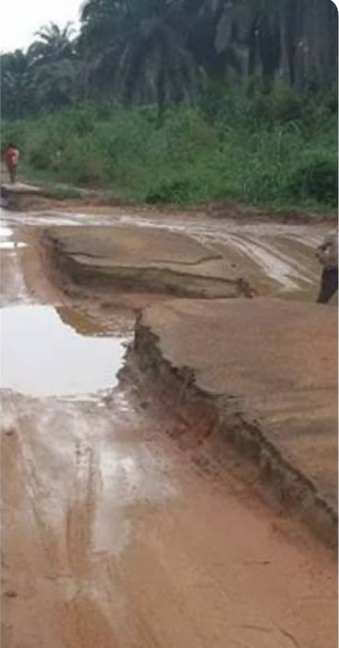
Has no motorable access roads
Has no functional hospital
Has no representative in times of insecurity
Has no visible government presence despite giving massive electoral support
The contradiction is painful. The injustice is glaring.
AGWA’S YEARS OF PAIN: WHEN THE PEOPLE STOOD ALONE
Between 2023 and 2024, Agwa endured a stretch of insecurity that claimed dozens of lives, displaced entire families, destroyed livelihoods, and spread fear like wildfire across its ten communities.
Yet throughout this tragic season:
No Senator came.
No House of Representatives Member raised a motion.
No State Assembly Member visited the grieving families.
No federal or state agency mobilized relief.
Agwa mourned alone, buried its dead alone, and rebuilt its shattered farmlands alone. A government that cannot be present in the darkest hours has failed the social contract that binds leaders to their people.
And still, the suffering did not subside.
NATURAL DISASTERS—AND A DEAFENING SILENCE
From April to May 2025, thunderstorms, thunder strikes, and environmental disasters ravaged Agwa. Over 100 homes were swept away. Farmlands were ruined. Human lives were lost.
Inside Agwa News covered every detail. Inside Agwa TV aired a full documentary that reached thousands across the country.
Yet:
NEMA did not come.
ISOPADEC kept its distance.
NDDC maintained eerie silence.
No Senator visited.
No House Member intervened.
No Commissioner appeared.
No State Assembly Member showed concern.
What crime did Agwa commit to deserve this level of abandonment?
THE DARKNESS OVER AGWA: A SYMBOL OF GOVERNMENT FAILURE
The “Light Up Niger Delta” solar project illuminated towns across the region. Even bush paths in Ihitte-Uboma and Mbaise enjoy light.
Yet Agwa—an oil clan—remains swallowed by darkness.
Not a single functional solar installation.
Not a single electricity line.
If this is not exclusion, what is?
EDUCATION AND HEALTHCARE: AGWA LEFT AT ZERO POINT
Agwa Secondary School (ASSA), the only public secondary school in the entire clan, is a collapsing ruin—unfit for animals, let alone children. During periods of insecurity, children stayed home for years. Today, they remain without conducive classrooms or basic learning materials.
The health sector is no different. There is neither a functional hospital nor a decent primary healthcare center. Women still travel to neighboring clans to give birth. Many die along the way.
Agwa is not asking for luxury—just the basic social services owed to every tax-paying, law-abiding Nigerian community.
A DIRECT APPEAL TO OUR REPRESENTATIVES
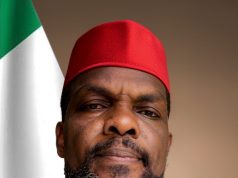
1. Rt. Hon. Eugene Dibiagwu
Member, House of Representatives
Ohaji-Egbema/Oguta/Oru-West Federal Constituency
Honourable Dibiagwu, Agwa stands within your federal constituency. Your projects across communities are commendable, but Agwa is calling—respectfully yet urgently—for inclusion.
Extend your developmental footprint to Agwa.
Let our voice reach the Green Chamber.
Move motions, sponsor interventions, and help amplify the challenges your people face.
The humanity of your constituency begins in its most neglected corner. Today, that corner is Agwa.
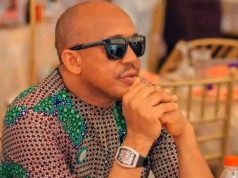
2. Senator Osita Izunaso
Senator, Imo West (Orlu Zone)
Distinguished Senator, your mandate covers Agwa as much as it covers the other communities in Orlu Zone. Agwa contributes oil, votes, manpower, and economic activity to the district.
We appeal to your leadership:
Remember Agwa.
Visit our communities.
Raise our concerns in the Senate.
Facilitate federal projects, especially roads, health interventions, educational support, and security relief.
Posterity will record those who acted—and those who remained indifferent.
3. Hon. Gilbert Chiedozie Nwosu
Member, Imo State House of Assembly
Oguta State Constituency
Honourable Member, Agwa is not just part of your constituency—it is the heartbeat of Oguta’s agrarian economy. Leadership is not measured by political advantage alone, but by courage, visibility, and empathy.
Your people need you.
Speak for Agwa at the State House.
Push for electrification, schools, roads, and security.
Let your legislative legacy reflect community-centered governance.
Remember: development is the greatest legacy a leader can leave.
4. ISOPADEC — Chief Austin Managing Director
As the interventionist agency for oil-producing communities, Agwa is one of your primary obligations. We appeal for:

Renovation and construction of schools
Provision of learning materials
Equipping primary health centers
Community development support
Attention to disaster-impacted households
Agwa cannot continue to host oil companies while remaining structurally impoverished.
5. NDDC — Hon. Kyrian Uchegbu, Commissioner
NDDC’s mandate is clear: develop Niger Delta communities.
Agwa is a Niger Delta clan.
We urgently request:
Road infrastructure
Human capital development programmes
Education empowerment
Electrification via the Light Up Niger Delta solar initiative
Skills and livelihood programs for youths and women
A Niger Delta clan in darkness is a contradiction that must be corrected.
A MESSAGE TO THE IMO STATE GOVERNMENT
To His Excellency, Senator Hope Uzodimma
Agwa was the 11th highest voting bloc that supported your reelection. Our people gave you their votes wholeheartedly and have remained loyal to your administration.

We are not asking for too much.
Fix our roads.
Give us electricity.
Ensure security by ending the Fulani herdsmen’s occupation of our farmlands.
A community that supported you deserves at least basic social justice.
POLITICAL PHILOSOPHY SPEAKS TO OUR PRESENT PAIN
Political thinkers across history have emphasized the moral duty of leaders:
John Locke (Social Contract Theory):
Leadership is a sacred trust; once it fails the people, it loses legitimacy.
Rousseau (General Will):
Leaders must act for the collective good, not selective interest.
Karl Marx (Social Responsibility of Leadership):
Neglect of productive communities deepens inequality, fostering social instability.
These ideas, though centuries old, are painfully relevant in Agwa today.
AGWA MUST PREVAIL
Agwa’s cry today is simple:
See us.
Hear us.
Serve us.
Stand with us.
We are rebuilding our broken walls with bare hands, but governance must return. No community progresses on self-help alone—not in a constitutional democracy.
The time for silence has ended.
The time for presence has begun.
Agwa must not only survive—
Agwa must prevail.
John Mbonu Uchenwoke-Ekperechi
Publisher/Editor-in-Chief
B.A. History and International Studies, University of Nigeria, Nsukka (UNN)
M.A. Peace and Conflict Resolution Management, Institute of African Studies, UNN (in view)
Member, International Society of Substance Use Professionals (ISSUP)
Member, Young African Leaders Initiative (YALI)
Member, African Center for Youth Development, Education & Advocacy (GME)
Convener, Renaissance Oguta Constituency-ROC