By Hon. Desmond Ofoma
In the heart of West Africa, Nigeria stands as a paradox, a nation blessed with abundant human and natural resources, yet haunted by a recurring specter that threatens its democratic foundations. Political violence, from the blood soaked elections of the 1960s to the sophisticated digital warfare of today, has become the canary in the coal mine, a stark indicator of a democracy struggling to breathe.
Political violence in Nigeria is not merely the result of election day skirmishes. It is a complex ecosystem fueled by poverty, ethnic rivalry, religious tension, and the desperation of millions who see political power as the only path to survival.
“When the state fails to provide security, jobs, or justice, communities turn to violence as a political tool”. explains Dr. Jude Ibe, a political scientist .
The rule of law, the bedrock of any functioning democracy, has been systematically weakened by political violence. Perpetrators often connected to powerful political godfathers rarely face justice. This impunity creates a vicious cycle.
*Violence Shapes Outcomes.* Youth thugs, armed by political patrons, disrupt opposition rallies, intimidate voters, and rig elections.
*Justice Fails* . Police are poorly equipped, underfunded, and sometimes complicit. Prosecutions are rare, and convictions are rarer.
*Democracy Erodes* . When citizens cannot trust that their votes will count or that their safety is guaranteed, participation declines. Democracy becomes a facade.
Just recently, the National Democratic Congress (NDC) meeting, scheduled to chart a path for democratic consolidation in Imo State, was violently hijacked. It was not a debate. It was an execution of the democratic process.
The incident began as a logistical headache. A bus load of young men, uninvited and aggressive, arrived at the venue of the meeting. Within minutes, the “logistics” turned into a siege. Witnesses described a swarm of men armed with machetes, iron bars, and broken bottles. They did not come to argue policy. They came to annihilate.
Chairs were not merely overturned; they were reduced to kindling. Canopies, party’s banner, emblazoned with the NDC logo and the word “Unity,” was torn down and trampled into the mud by the very feet of those who claimed to be political actors.
“We were in a peaceful meeting of the party, whispered Martin Okere, a party elder whose white agbada was splattered with mud and the spray of a broken bottle.
“They came to destroy. They didn’t want a meeting. They wanted a funeral for our voice.”
This scene, repeated with sickening regularity across Nigeria, is not merely a story of criminality. It is a stark, haunting portrait of a democracy in atrophy.
The attack on the NDC meeting in Owerri is a microcosm of a larger, systemic failure: the weaponization of violence as a primary tool of political negotiation.

In a functioning democracy, the rule of law ensures that disagreements are settled in courtrooms and legislative chambers. But in the political economy of many Nigerian states, violence has become the cheapest and most effective currency.
“Political thugs” are no longer marginal figures lurking on the fringes. They are, as one security analyst put it, “the unofficial enforcement arm of the political class.”
The logic is brutally simple. If you cannot win an argument, you prevent the argument from happening. If you cannot convince voters, you intimidate them. If you cannot secure a majority in a meeting, you destroy the venue.
The NDC meeting in Owerri was not vandalized because of a personal grudge; it was vandalized to send a message. The message was clear, political space is not a right, but a prize to be seized through force.
This erosion has a direct, chilling effect on the “rule of law.” When a party cannot hold an internal meeting without the threat of a machete attack, the law is not absent it is deliberately ignored.
The police, though often present in the aftermath, rarely prempt such violence. The perpetrators often linked to godfathers and sitting politicians enjoy a perverse immunity. The very institutions designed to protect democratic processes become complicit in their decay through inaction.
The aftermath in Owerri is a ghost town of shattered plastic chairs and papers .The silence is punctuated only by the whispers of members who wonder if they should resign, if the price of participation is too high.
The broken canopy of the NDC meeting is a metaphor for the Nigerian democratic project itself. It stands in stark contrast to the high ideals of the constitution.
The right to assemble is guaranteed on paper, but is being erased by the boots of hired thugs. The freedom of speech is written in law, but is being silenced by the iron bar.
For democracy to survive, it must be more than the absence of a military dictator. It must be the presence of a firm, unassailable rule of law, one that makes the vandalism of a political meeting a high risk, high cost crime.
Until a politician in Owerri is arrested, prosecuted, and jailed for sending thugs to break a chair on a fellow citizen’s head, the NDC meeting will remain more than a memory of a violent afternoon. It will be a blueprint for the failure ahead.
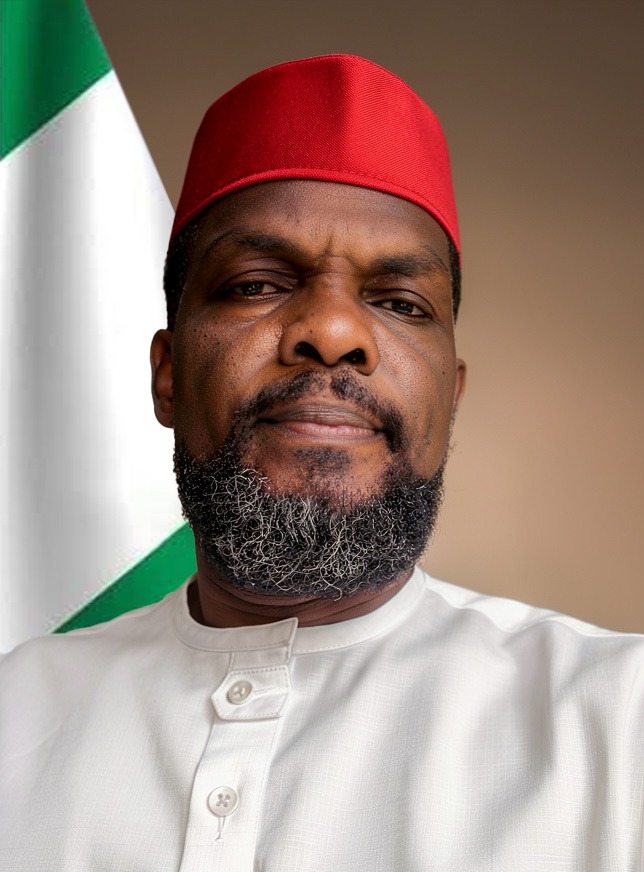
Hon. Desmond Ofoma, is the Owerri Zonal Coordinator, Obi-Kwankwaso National Solidarity Movement